
Roseville Mold Remediation
Certified technicians contain airborne fungal spores, eliminate hidden colonies, and restore structural framing to safe baseline standards. We deploy medical-grade HEPA filtration and thermal imaging to protect your indoor environment from persistent contamination.
Once the water is off, call (916) 555-0134.
Precision Mold Remediation And Environmental Care
Our crew brings extensive regional restoration experience to every home requiring environmental containment.
We deliver comprehensive emergency water mitigation and structural drying to halt moisture spread before demolition begins.
A pattern echoed in public discussions is that surface-level extraction and standard dehumidification that leave trapped moisture inside wall framing can trigger recurring secondary mold growth.
Sustained summer heat drives heavy air conditioning usage across the area, creating steep thermal gradients where condensation on uninsulated ducts triggers hidden mold growth inside ceiling cavities.
The median owner-occupied home across this municipality was built in 1997 according to Census ACS 5-year data, meaning many older duct runs lack modern thermal barriers.
With 58,435 housing units on record in the Census ACS 5-year estimates, our crew treats every neighborhood structure with uncompromising isolation protocols.
We thoroughly inspect hidden cavities and maintain continuous negative air pressure so clean living spaces stay completely protected.
How We Resolve Hidden Fungal Growth
Our certified restoration workflow isolates contamination, extracts hidden moisture, removes affected drywall, and verifies clean indoor air quality.
- Thermal Moisture Mapping. Homebuyers evaluating prior multi-story bathroom plumbing leaks require verified moisture mapping to ensure subfloor framing is thoroughly dry and free of hidden mold before closing on local property. As demonstrated in professional restoration reviews, FLIR thermal cameras identify moisture pockets trapped behind walls and subfloors without demolition, preventing hidden rot.
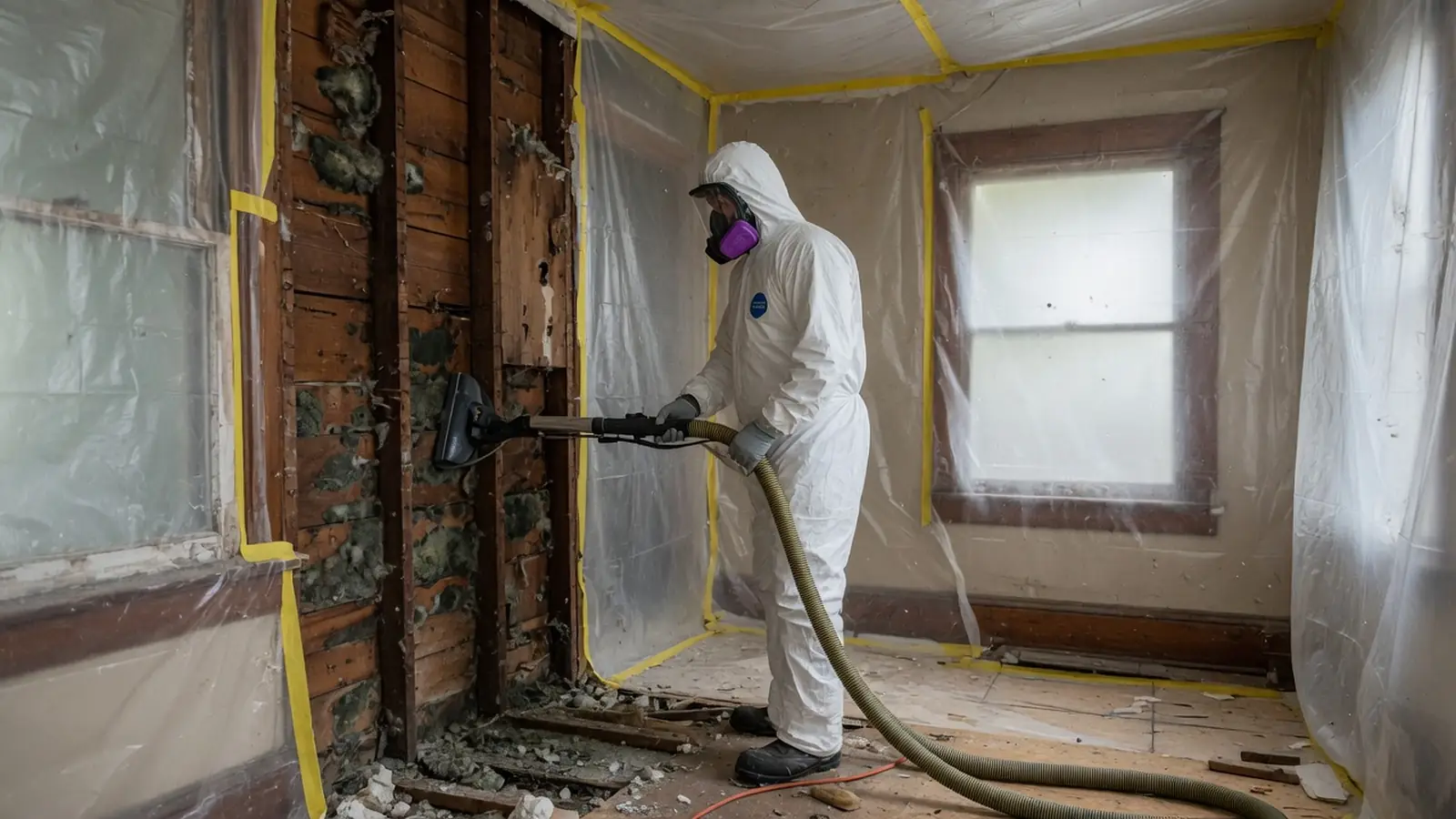
- HEPA Containment Isolation. Remediation protocols require physical plastic containment under negative air pressure with HEPA filtration before demolition starts to prevent airborne fungal spores from cross-contaminating clean rooms. For properties dealing with deeper water intrusion, see our approach to complete flood cleanup to prevent widespread structural degradation.
- Selective Antimicrobial Remediation. Crews physically bag damaged porous materials and scrub remaining structural lumber using hospital-grade antimicrobial agents. We mechanically clean every exposed framing member to eliminate hyphae and fungal roots.
- Clearance Air Verification. Independent post-remediation clearance testing ensures total airborne particulate counts fall below outdoor reference levels before drywall reconstruction begins. We never dismantle containment barriers until certified laboratory samples confirm clean results.
Our Iron-Clad Workmanship Standard
As homeowners often describe in local discussions, spreading ceiling water marks accompanied by unexplained respiratory symptoms raise concerns over active indoor mold growth versus past moisture staining. Industry guidelines highlight that insurers mandate immediate mitigation and typically deny coverage for secondary damage like mold if standing water was left unaddressed. Whether navigating routine pipe failures or resolving severe structural storm damage, our crew adheres strictly to certified containment standards without cutting corners.
Crawlspace And Attic Abatement
We isolate and remediate fungal colonies in hard-to-reach crawlspaces and unconditioned attics. Our technicians seal duct penetrations and treat framing to stop spores from entering your living areas.
Structural Drywall And Subfloor Decontamination
When moisture seeps behind baseboards, we remove waterlogged drywall and decontaminate saturated subflooring. Every exposed wooden joist is thoroughly sanded and treated with an EPA-registered fungicidal coating.
HVAC And Ductwork Sanitization
Condensation inside ceiling cavities frequently spreads mold spores through forced-air heating and cooling systems. We sanitize duct interiors and blower compartments to restore clean airflow throughout the property.
Our Commitment To Verified Environmental Standards
We approach every remediation job with surgical containment and verifiable scientific standards. Customers can expect transparent communication, meticulous plastic isolation barriers, and independent lab clearance documentation before any containment wall comes down.
- 12Zip Codes Served
- 6Service Areas
- 3Services Offered
Read honest feedback from local property owners who experienced our environmental containment and remediation services firsthand.
“When our HOA flagged the exhaust equipment venting outside during containment, the crew stepped in immediately and walked the board through their HEPA filtration setup. They kept the entire exterior clean and answered every question with complete patience. Having that kind of professional communication prevented what could have been a major neighborhood dispute.”
Marcus B.
“Six months after the cleanup inside our master ceiling cavity, the air quality remains completely fresh and neutral. We dealt with chronic stuffiness for nearly a year prior, but their thorough extraction solved the root issue entirely. It gives us incredible peace of mind knowing the mold never returned.”
Elena V.
“My elderly father lives with us and uses a walker, so the team carefully taped down every hose and routed negative air ducts away from his primary hallway. They even checked in with us before running louder machinery to ensure he was comfortable in his room. Their thoughtful attention to his safety made an overwhelming situation manageable.”
Donald K.
“Another contractor offered a cut-rate estimate that completely skipped negative air containment and subfloor moisture mapping. This company explained why skipping those safety barriers would simply blow fungal spores into our living room, so we hired them instead. Choosing their disciplined approach saved us from facing recurring contamination down the road.”
Rachel T.
Frequently Asked Questions
Is post-remediation clearance air testing necessary before drywall reconstruction begins to verify that airborne spore counts have returned to normal baseline levels?
Yes, clearance air testing verifies that indoor fungal spore counts have safely dropped to normal baseline levels before any drywall reconstruction starts.
How long does a professional residential mold remediation project typically take?
Most residential mold remediation projects require between two and five days depending on the structural moisture levels and containment zone size.
Will homeowner insurance policies cover the cost of mold remediation services?
Insurance policies typically cover mold remediation only when resulting directly from sudden, accidental water perils rather than ongoing leaks.
Can my family remain inside the home while mold remediation takes place?
Occupants can generally stay in unaffected areas when containment barriers maintain negative pressure, though severe cases warrant relocation.
What causes recurring mold issues behind walls after water damage is cleaned up?
Recurring wall mold happens when surface drying fails to eliminate deep structural moisture trapped within wooden framing cavities and subfloors.