
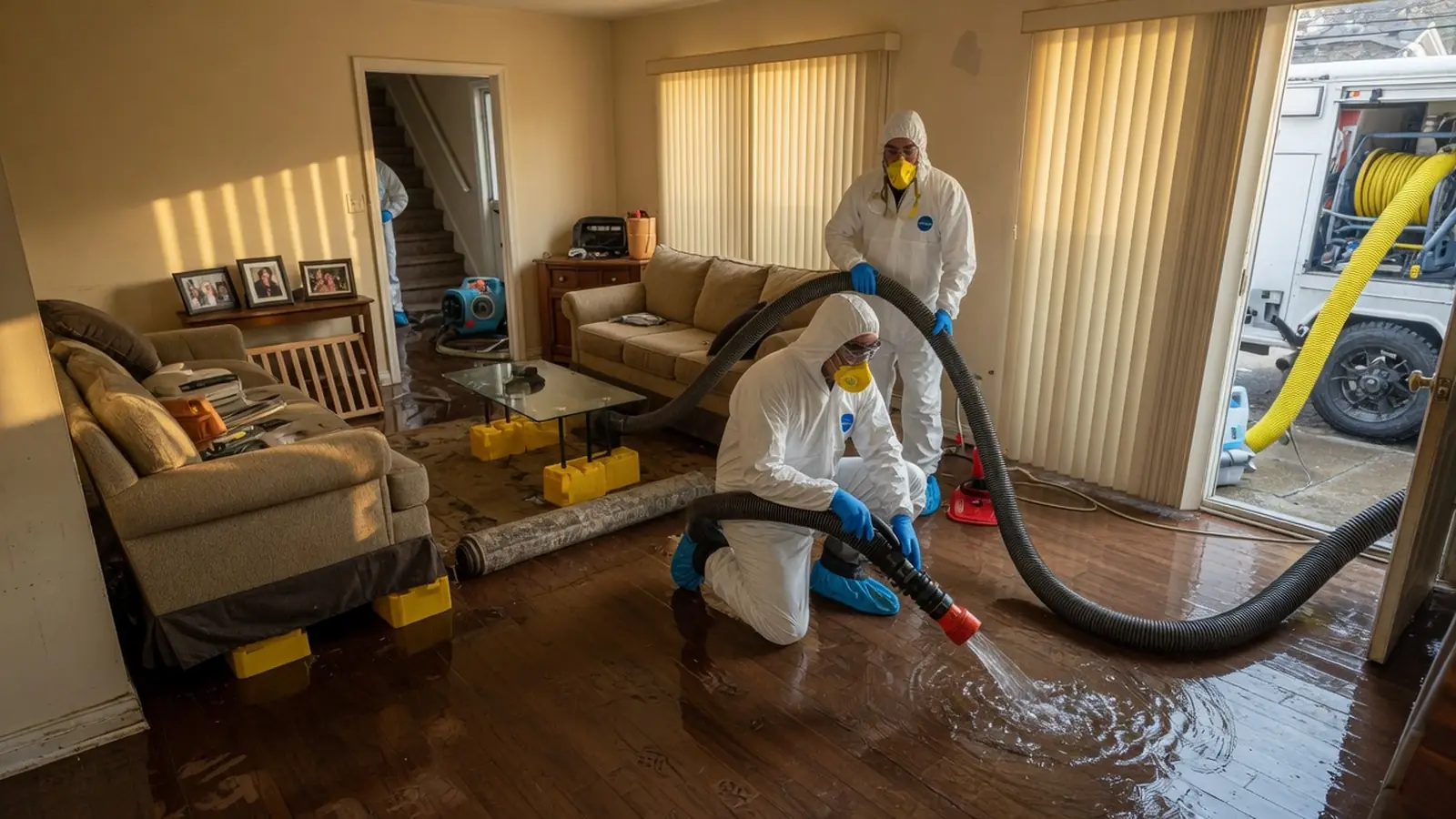
Emergency Water Damage Restoration Roseville CA
Indoor water intrusions spread quickly through finished flooring, wall cavities, and framing timbers if left unaddressed. Experienced mitigation technicians stabilize the property, extract standing water with commercial equipment, and monitor humidity until moisture levels normalize. Fast containment protects building materials and prevents extensive secondary structural damage.
Water running somewhere it shouldn't? Call (916) 555-0134.
Precision Structural Drying And Mitigation
Our mitigation crews specialize in rapid moisture extraction and complete structural drying across older and modern regional homes.
About 7% of housing units in the community (3,979 of 58,435) were built before 1960, the era of galvanized steel supply lines and cast iron drains.
About 4% of local housing units (2,258 of 58,435) were built in the 1960s, overlapping the years aluminium branch wiring was installed.
About 22% of residential housing units (13,064 of 58,435) were built in the 1970s and 1980s, overlapping the years polybutylene supply piping was commonly installed.
About 33% of housing units in the area (19,301 of 58,435) were built before 1980, the period when asbestos-containing materials and lead paint were still in use.
On a recent call, technicians extracted hundreds of gallons from a split supply line beneath a kitchen island and saved the surrounding engineered oak flooring.
Severe storm conditions cause rooftop debris to dam rainwater, leading to sudden active ceiling leaks that threaten living spaces, a recurring pattern shared across regional homeowner discussions.
When unexpected roof valley dams occur, property owners rely on our technicians to mitigate exterior storm damage before interior leaks worsen.
Every project concludes with comprehensive moisture mapping and photographic documentation to give property owners total peace of mind.
Our Four-Step Water Restoration Process
While NOAA radar recorded 0 hail signatures within about 15 miles locally between 2021-2025 (2021: 0, 2022: 0, 2023: 0, 2024: 0, 2025: 0), atmospheric downpours and domestic pipe ruptures still demand prompt structural intervention.
- Immediate Emergency Dispatch And Inspection. Technicians assess standing water across foundation perimeters and living areas immediately upon arrival. A pattern echoed in public discussions is that heavy seasonal precipitation inundates crawlspaces with standing water, requiring rapid pumping and dedicated sump pump installation to prevent structural rot. We position high-volume submersible pumps to eliminate standing pools before structural timbers absorb excess moisture.
- Water Extraction And Thermal Moisture Mapping. Industrial truck-mounted extraction units remove surface water from carpets, tiles, and subfloors. Technicians then deploy infrared thermal imaging cameras alongside non-invasive moisture meters to chart the full boundary of moisture penetration behind walls and beneath flooring.
- Industrial Dehumidification And Air Movement. Commercial Low Grain Refrigerant dehumidifiers and high-velocity axial air movers create balanced airflow across saturated surfaces. Constant evaporation pulls moisture from deep within structural sill plates, wall studs, and joists into the air stream for condensation and disposal.
- Moisture Clearance And Antimicrobial Sanitization. Technicians apply botanical antimicrobial agents to inhibit bacterial proliferation and fungal spores on exposed framing. Daily psychrometric logging tracks relative humidity and grain depression until all structural materials reach verified dry standard targets.
Documented Moisture Clearance And Workmanship
Our team operates under strict IICRC restoration standards to return saturated residential structures to verifiable baseline moisture levels. Homebuyers evaluating prior multi-story bathroom plumbing leaks require verified moisture mapping to ensure subfloor framing is thoroughly dry and free of hidden mold, which is why our technicians supply formal digital logs and meter readouts at project completion. For properties facing severe ground intrusion, owners can schedule complete flood cleanup for subfloors and crawlspaces backed by thorough sanitization.
Burst Pipe Water Mitigation
Freeze-thaw plumbing ruptures inside wall cavities flood multiple finished rooms, creating an urgent need for immediate water mitigation and structural drying. Our technicians extract standing water quickly from baseboards, drywall cavities, and subfloors. Daily thermal monitoring verifies that internal wall framing dries completely before reconstruction begins.
Structural Hardwood Drying
Specialized injection floor mat drying systems draw trapped water directly through hardwood planks and underlying subflooring. This non-destructive methodology often preserves expensive wood surfaces and eliminates premature cupping or buckling. Controlled drying cycles save property owners from costly full-floor tear-outs.
Sewage And Graywater Extraction
Blackwater and graywater overflows present immediate biological hazards requiring professional containment and disposal. Crews remove unsalvageable porous padding, apply EPA-registered antimicrobial solutions, and establish negative air pressure machines. Thorough treatment restores clean, hygienic conditions throughout living areas.
Our Approach To Emergency Restoration
We focus on rapid response, certified drying protocols, and transparent moisture tracking for every residential water loss. Rather than guessing, technicians log psychrometric readings daily to ensure structural members reach equilibrium moisture content.
- 10Zip Codes Served
- 4Service Areas
- 3Services Offered
Read genuine feedback from local homeowners who experienced sudden plumbing ruptures, roof leaks, and subfloor water intrusions.
“When my next-door neighbor's laundry valve failed last month, I told him immediately to call this company. The crew had saved my oak hardwood floors after an upstairs toilet supply burst, setting up drying mats within two hours of my initial call. His drying job went just as smoothly as mine did.”
Marcus B.
“Pulling back the wet insulation revealed cracked vintage drain pipes hidden behind our downstairs pantry wall. Instead of pausing work or escalating stress, the crew pointed out the issue calmly and adapted their containment barriers right on the spot. They completed structural dehumidification around the plumbing without any unexpected delays.”
Elena S.
“Our escrow inspection was scheduled for Thursday morning, so discovering water soaking the hallway subfloor on Monday caused total panic. The team brought in commercial air movers immediately and tracked moisture content every morning until the structural timbers hit target dry standards. We handed clear moisture clearance documentation directly to the buyer's appraiser on time.”
David T.
“Another service left damp baseboards trapped behind plastic sheeting, claiming the moisture would evaporate on its own within a week. The crew came in, removed the improperly sealed drywall, and set up negative air scrubbers to eliminate trapped dampness properly. Their thorough remediation completely reversed the musty odor the first outfit left behind.”
Brenda K.
Frequently Asked Questions
Does homeowner insurance require emergency tarping or board-up immediately after storm damage to prevent secondary water intrusion from voiding coverage?
Homeowner insurance requires emergency mitigation like tarping to stop secondary water intrusion from compromising coverage under standard policy terms. Standard property casualty policies include a contractual duty to mitigate damages, meaning failure to protect exposed areas can lead claims adjusters to deny coverage for subsequent water rot.
How quickly should professional water extraction begin after an indoor pipe rupture?
Professional water extraction should begin within 24 to 48 hours to stop microbial growth and prevent warping of subfloors and framing. Immediate extraction stops liquid water from migrating across floor plates and deep into wall insulation, preserving drywall and subfloors.
What factors determine whether wet drywall must be cut out or can be dried in place?
Drywall must be removed if saturated by contaminated drain water or if moisture content stays elevated past standard structural drying limits. Clean water pipe leaks often allow gypsum board to be dried in place using controlled air movers, provided structural integrity remains intact and no sagging occurs.
How do structural restoration technicians verify that wall cavities and subfloors are completely dry?
Crews verify dryness using calibrated pinless and penetrating moisture meters compared against baseline readings from dry framing. Daily psychrometric charts and infrared thermal scans ensure hidden sill plates and floor joists reach standard dry equilibrium before closing containment.
Can commercial dehumidifiers run safely while residents remain inside the home?
Industrial dehumidifiers operate safely in occupied homes, though equipment creates continuous warm air movement and steady background fan noise. Crews position equipment to maintain accessible walkways and monitor electrical circuits to ensure safe, uninterrupted drying.